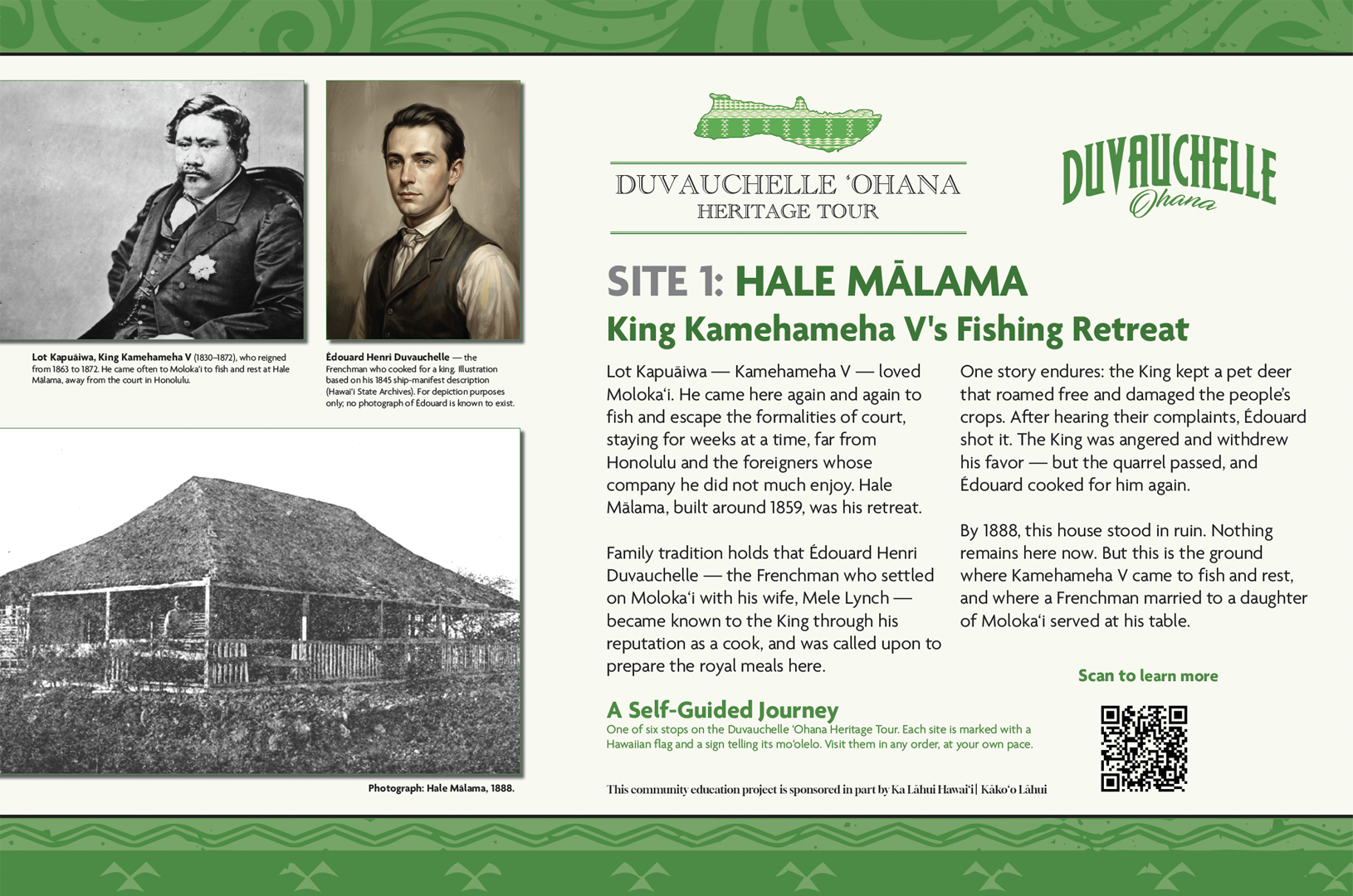
Hale Malama – King Kamehameha V (Lot Kapuāiwa)'s Fishing Retreat
Hale Malama was the fishing retreat of King Kamehameha V, Lot Kapuāiwa, located at Kaunakakai, Molokaʻi. Before and during his reign, Lot frequently visited Molokaʻi to fish and spend time away from the formalities of court life. Family tradition holds that Edouard (Edward) Henry, a French chef who settled on Molokaʻi with his wife Mele, became acquainted with Lot through his reputation as an exceptional cook. Edouard was often called upon to prepare meals for the king during his visits to Hale Malama and for royal feasts.
One well-known family story recounts how Edouard fell out of favor with the king after killing Lot's pet deer. The deer had been allowed to roam freely and was damaging local crops. After hearing repeated complaints from residents, Edouard decided to shoot the animals, believing it should not be kept as a domesticated pet. King Kamehameha V was angered by the incident, reprimanded Edouard, and temporarily withdrew his favor. According to family accounts, the disagreement eventually passed, and Edouard continued to serve as the king's cook. The site of Hale Malama remains an important place in the family's history, reflecting their connection to Molokaʻi and to King Kamehameha V during the Hawaiian Kingdom.
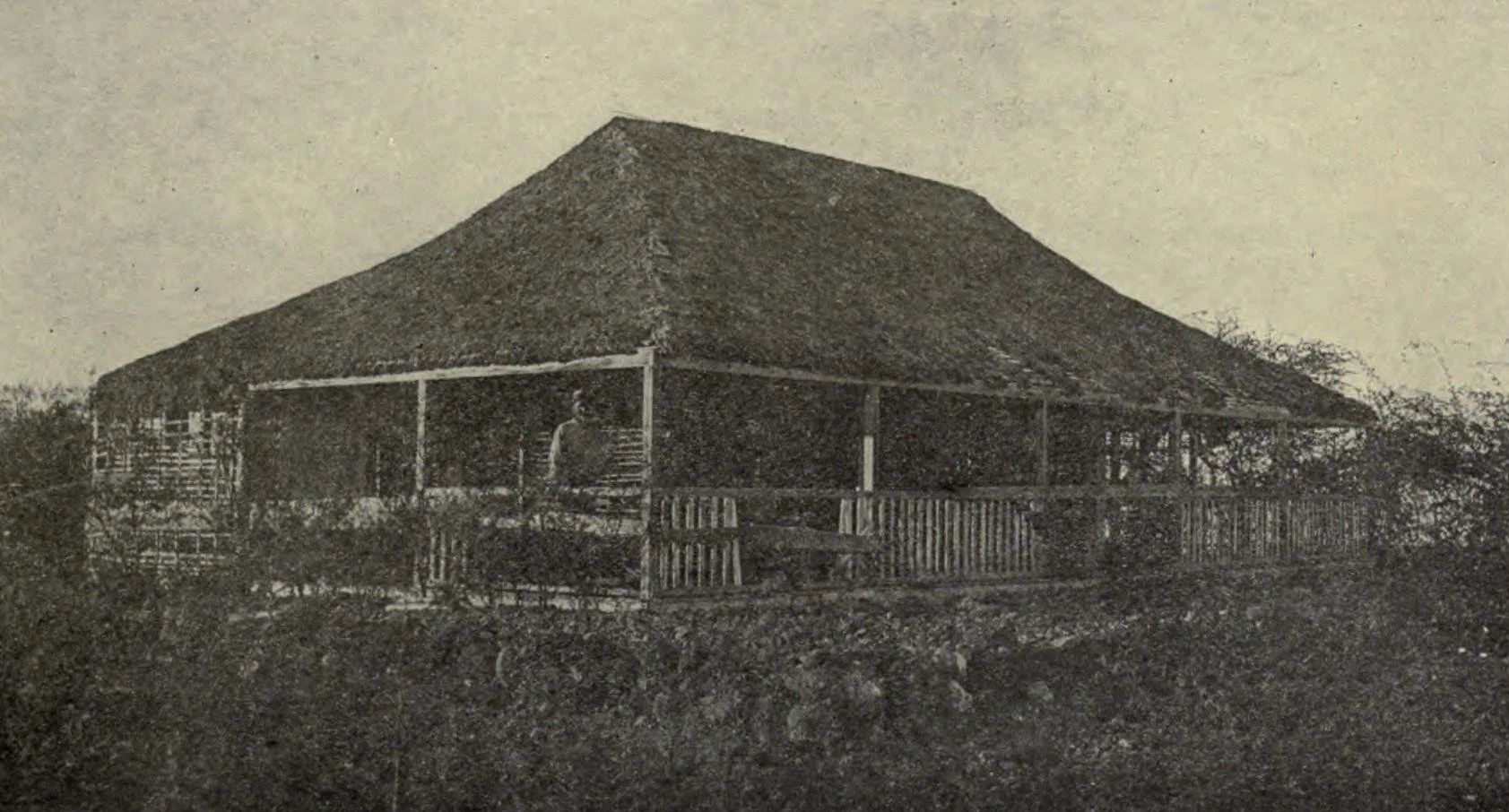
The house was built ca. 1859 and by 1888, it was highly deteriorated. The structure could be seen until 1908 (Hammatt et al. 2010:20). According to Cooke, the house was eventually “moved to the village, and the property of Wm. Kamakana” (Cooke 1949:151).
When this photograph was taken in 1888 the house was in ruin and quite uninhabitable; were it not for the bars across the lanai openings, cattle might have entered this deserted fishing lodge of the king who, like all his family, was so fond of fishing that he often deserted his court in Honolulu and was paddled to this place where he remained for weeks at a time, out of the reach of the foreigners who he liked none too well. The enclosed corner of the lanai or verandah was very foreign, however, and so were the partitions found within the house. (Brigham 1908:112)
Revisiting our past.
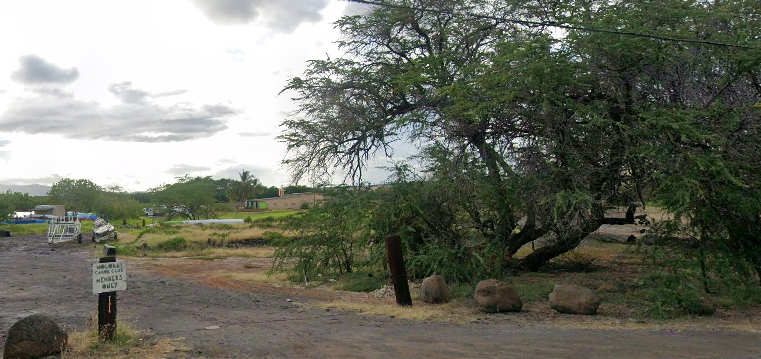
Today this is all that is left of Hale Malama.