Ho‘i i ka Piko: Return to the Source
Duvauchelle ‘ohana roots are in Puko‘o. In the early nineteenth century, two sisters named Pu‘ā (meaning a sheaf) and Kawelau (the summit) were born approximately between 1805 and 1810. Nothing is known of their parents, but they were Pūko‘o women, and this coastline was their home. Kawelau married Kauakahi. She then married Keka‘alauniu — whose name translates as The Revolving, Turning Frond of the Coconut — sometime around 1825. Together they had four children, among them a daughter, Kapakauaokamehameha, whose name carries within it the meaning The War Fortress of Kamehameha the Great.
The children of Keka‘alauniu were given names that echo King Kamehameha’s long encampment on Moloka‘i before the invasion of O‘ahu in 1795. The meanings of these names have long suggested to the family a closeness to that history. Kapakauaokamehameha married Captain John Lynch between1839 and 1843. Their union produced our matriarch Mele Lynch the second wife of Edourd Duvauchelle.
Kūkū (Grandmother) Mele (Lynch) Duvauchelle is buried at this site. It was also the location of the Duvauchelle homestead, which consisted of three houses. Edward K. Duvauchelle lived in one with his second wife, Annie (Wood) Duvauchelle, and their children. A second house served as the family's gathering place where they shared meals, while the third was home to Kūkū Mele and Edward's three sons from his first marriage to Alapai Kapaiwi. This was the heart of the Duvauchelle ʻohana in east Molokaʻi, where they operated a ranch, post office, shark hunting business, and later Kalani Hale Hotel.
In 1906, Queen Liliʻuokalani visited Molokaʻi and chose to stay with the Duvauchelle family. Edward K. Duvauchelle rushed to complete his new home, and before any member of the family had spent a single night in it, the Queen became its first occupant. Laura Duvauchelle Smith later recalled that during the Queen's stay, Hawaiians came each day bearing gifts. From the front gate to the house, they dropped to their knees, crawled while chanting, and approached our Queen in the traditional manner, a moving expression of the love and respect they continued to hold for our monarch.
In 1917, the home was converted into Kalani Hale Hotel. It burned to the ground in 1922, destroying Edward K. Duvauchelle's papers, business records, and treasured family heirlooms.
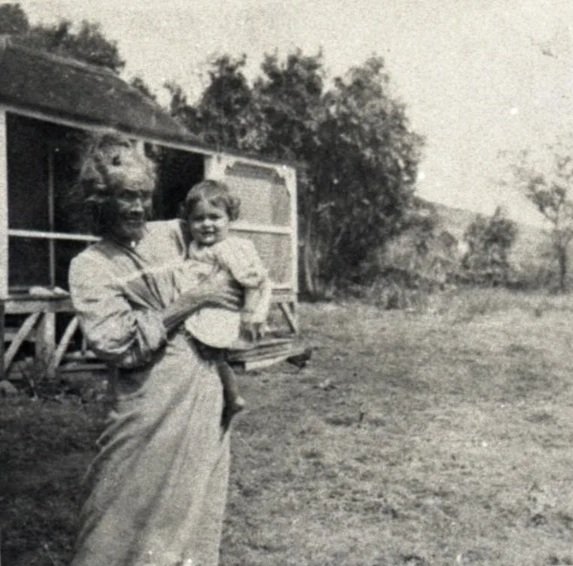
Kuku Mele (Lynch) Duvauchelle with grandson, Eugene Keka‘alauniu.
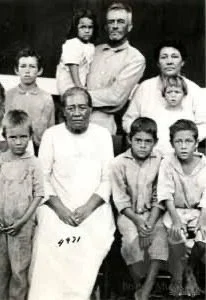
Edward K. Duvauchelle with wife, mother in-law, and children.
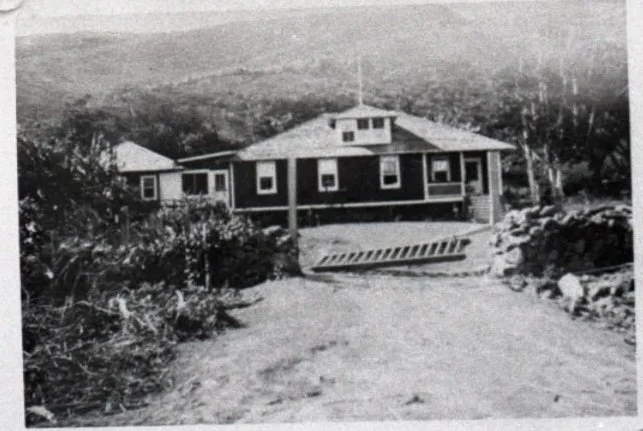
Kalani Hale, the Duvauchelle Hotel